
Inside AstraZeneca: Meet The Black Scientists Working to Transform the Future of Healthcare.
Behind every medical breakthrough are the curious minds, skilled hands and passionate hearts of scientists who are reshaping what’s possible in healthcare. At AstraZeneca, a diverse group of innovators is driving this transformation, bringing unique perspectives and experiences to some of the most pressing challenges in medicine.
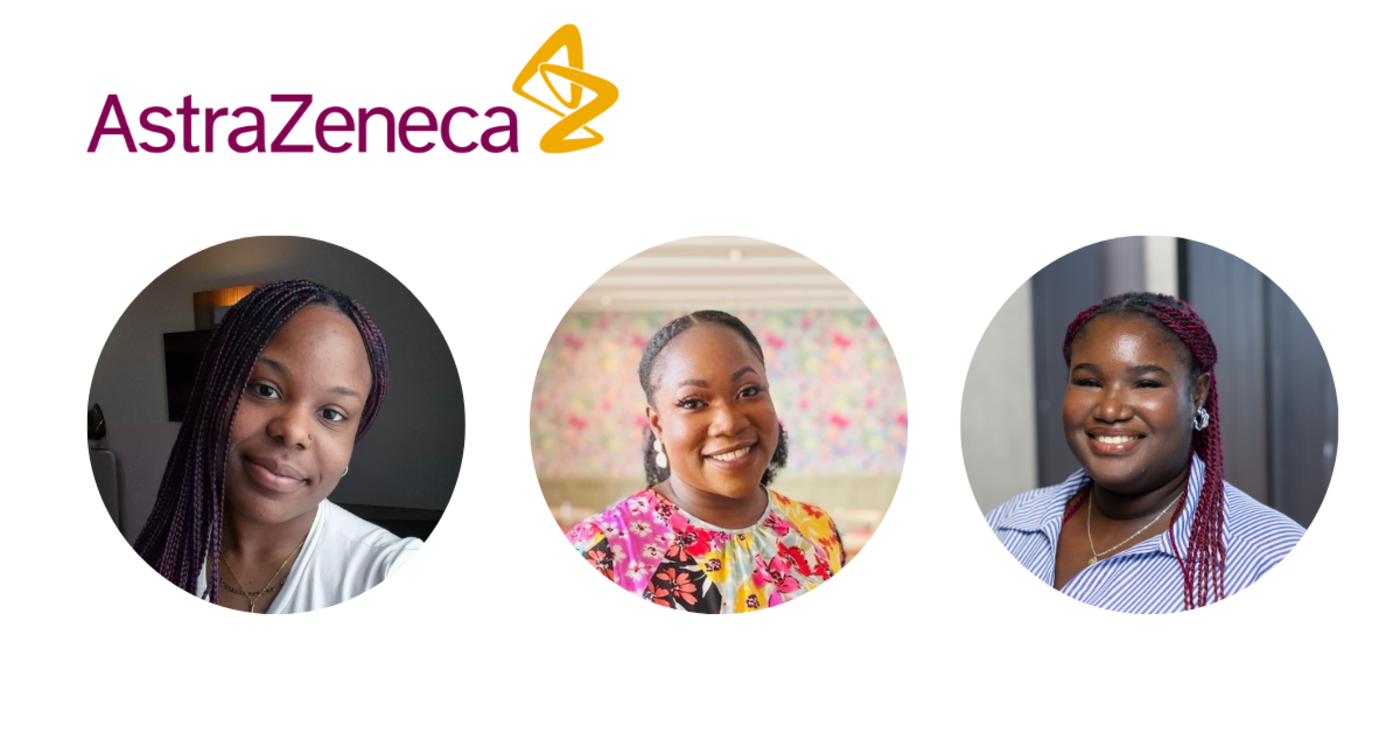
Among them are Tobi Akinsemoyin, Process Engineering Degree Apprentice, who is helping optimise manufacturing techniques within Global Product Development while studying for a BEng in Chemical Engineering, Funmi Alimi, Ph.D. Associate Director in Audit Quality Assurance, whose background in pharmacy and passion for quality ensure the highest standards in clinical trials and Favour Ubadike, GSC Data Science Apprentice, who applies data-driven insights to enhance supply chain efficiency and improve patient access to medicines.
Together, they share their journeys, the importance of representation in science and how they’re helping shape a more inclusive and innovative future for healthcare.
What does a typical morning look like for you and how does your company’s work culture shape your day-to-day?
Favour: There’s something grounding about arriving at work early, picking your favourite desk, placing your stuff down and just taking the time to breathe. I use the hour before 9am to plan my day, checking off tasks and adding new ones to my to-do list, reviewing emails and messages and mentally mapping out the week ahead. Balancing full-time work with university studies has sharpened my ability to break down, group and prioritise tasks into manageable chunks, a routine I have integrated as part of my mornings. These early hours give me a sense of control and clarity before the day accelerates.
As a data science apprentice, most of my day is spent behind a screen, coding, building dashboards or attending project meetings. AstraZeneca’s culture plays a huge role in shaping how I navigate this. The emphasis on health and wellbeing means regular breaks are encouraged and I take full advantage by walking scenic routes onsite or grabbing a hot chocolate with a colleague at the coffee stations around the office.
The company’s open and social atmosphere also fosters continuous learning. After complex meetings, I feel comfortable jotting down questions and reaching out to colleagues for clarity. It’s a culture where curiosity is welcomed and collaboration is second nature. That openness helps me understand the work better and makes me feel genuinely connected and valued.
What are your main responsibilities and which projects have been the most exciting or impactful for you?
Funmi: In my role, I am primarily responsible for planning, executing and reporting on GCP audits for clinical trials, ensuring both regulatory compliance and patient safety. I am responsible for ensuring clinical trials run by AstraZeneca are being conducted as per regulatory expectations and standards set out by the International Council for Harmonisation's guideline for Good Clinical Practice (ICH E6 GCP) and applicable country-specific regulatory requirements. My research training; from case-study research and my PhD at the University of Nottingham, directly supports my work evaluating risks and driving continuous improvements. Some of the most exciting projects include leading complex audits in new areas. For example I was recently involved in an audit focussed on clinical trials that utilised clinical devices. This was a new area for me however, my experience and skills allowed me to navigate this challenge with confidence.
Another highlight is my involvement in co-leading and developing the Medical Evidence audit programme, this is a fast changing area for regulatory requirements in clinical research and I have enjoyed collaborating with other key stakeholders and challenging status quo approaches. These projects are impactful because they bridge scientific rigor, regulatory requirements and patient outcomes, mirroring my passion for translating research into patient centred solutions, a foundation laid during my doctoral research and my degree in Pharmacy.
What challenges have you encountered in your role and how have you learned to overcome them?
Tobi: The main challenge I have faced is imposter syndrome, being a degree apprentice coming straight from school and immediately getting involved in important projects with real world impacts. It was daunting as I felt as though I wasn’t qualified enough to be contributing to anything but I am overcoming it by realising that I am here to learn and become qualified. This has been an amazing opportunity to meet people, learn and grow and I was selected for a reason. Even though I haven’t yet completed my academic foundations, my experiences and opinions are still valuable.
How has mentorship, community or representation influenced your career journey?
Tobi: I met some other black apprentices and joined the Black Apprentice Network which helped me to find a community as I had relocated for my apprenticeship. This, as well as being a part of the wider apprentice community at AstraZeneca, made me feel much more comfortable in my job as there were others I could relate to, learn from and share experiences with. I have also recently joined our racial equity employee resource group (ERG) called embRACE, which has given me the opportunity to connect with other POC in the business.
Funmi: At AstraZeneca, mentorship continues through formal programmes and informal support networks, empowering me to reach for leadership opportunities within Audit QA and beyond. Community representation is crucial. It provides visibility, encouragement and tangible examples of success. As someone who has both benefited from and currently contributes to student mentorship for pharmacy students at Nottingham, I understand the power of outreach and diverse role models. These experiences underscore the value of collaboration, inclusion and mutual support, instilled in me from academic mentorship and participation in inclusion and diversity initiatives at AstraZeneca.
Favour: Mentorship has been one of the most transformative investments in my career journey. Each mentor I’ve had has shaped the way I think, approach problems and define growth - offering guidance not just for the work I do but for the person I’m becoming. Mentorship and community have taught me that growth is not a solo pursuit. It’s built through connection, shared experience and the belief that we rise by lifting others.
What advice would you share with aspiring professionals who want to follow a similar path?
Favour: Say yes to the opportunities that come your way even if they feel intimidating at first. Growth often starts with a little discomfort. Be curious, ask questions and don’t let fear hold you back from learning or connecting. The moments where you feel unsure are often the ones that lead to the biggest breakthroughs.
Whether it’s applying for a role, speaking up in a meeting or reaching out to someone you admire, take the leap. You don’t need to know everything to get started. What matters is your willingness to learn, your openness to feedback and your courage to take up space.
Tobi: Before starting an apprenticeship, you should make sure you’re working in a field and company with values that you align with and a job that you’re interested in. It is a big commitment, so enjoying it makes it much easier! Once you’re in, I would say go for it and dive in headfirst. The best way to learn on an apprenticeship is to get involved and take on opportunities as they come because that’s what you’re there for. Joining communities to expand your network can open so many doors. Be a champion for your own growth and don’t be afraid to advocate for yourself.
Funmi: My advice is to embrace every opportunity, inside and outside the classroom, from clinical placements to research projects as these experiences provide invaluable practical skills and confidence. Proactivity is key; seek mentors, build networks and get involved in outreach activities, as collaboration and leadership are essential in any role
Across AstraZeneca, people like Tobi, Funmi and Favour exemplify the company’s commitment to pushing the boundaries of science through collaboration, curiosity and inclusion. Their dedication reflects how diverse perspectives strengthen innovation and drive meaningful progress for patients worldwide.
By fostering an environment where every voice is valued and every individual is empowered to grow, AstraZeneca continues to build a culture that not only advances scientific excellence but also creates opportunities for the next generation of talent to thrive. Together, these scientists are helping shape a future where diversity fuels discovery and innovation transforms lives.
