
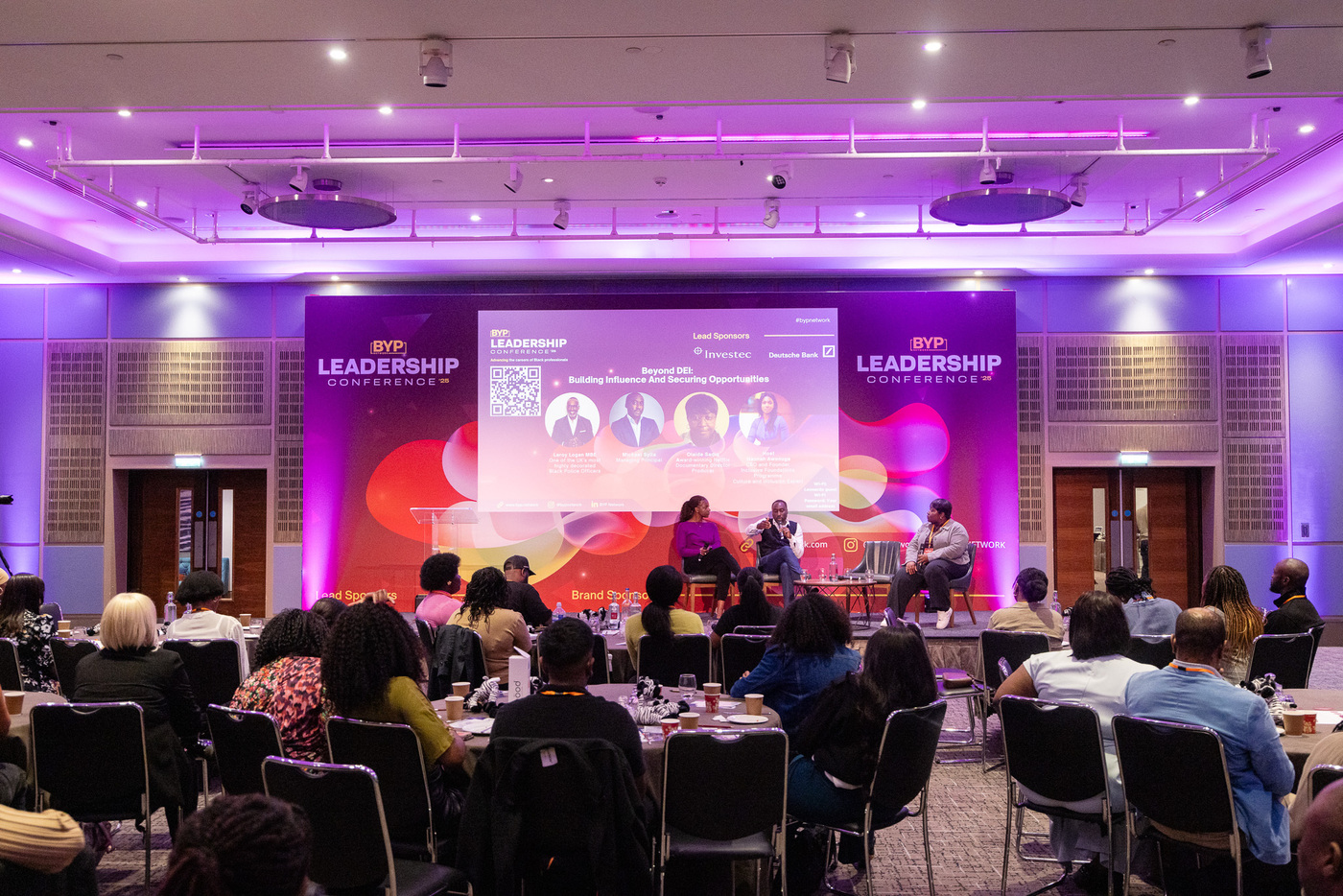
Beyond DEI: How Black Professionals Are Building Influence and Owning Opportunity
The conversation around diversity, equity and inclusion has shifted. The momentum that once drove corporate pledges and promises has cooled, leaving many wondering, what’s next? For a new generation of Black leaders, the answer is clear: it’s time to build influence, create access, and own the spaces we once had to ask entry into.
This message came through powerfully in a discussion hosted by Hannah Awonuga, CEO and founder of Inclusive Foundations Program. Bringing together three distinct voices; Olaide Sadiq, Leroy Logan MBE, and Mickael Sylla. The conversation unpacked what it means to lead, collaborate, and thrive when the system seems to be shifting backwards.
Owning Your Space: Speak up, strategically
When Olaide Sadiq, the award-winning director behind Grenfell Uncovered, noticed opportunities for Black creatives drying up, instead of waiting for an invitation, she made her own.
Taking a risk that could have gone either way, she sent a “punchy email” to decision-makers, outlining both her concerns and her capabilities. It wasn’t a complaint, it was conviction. That bold move led her to land the Netflix documentary and build one of the most diverse production teams in her career.
“Sometimes you have to be willing to take the risk, to advocate for yourself and say, ‘I deserve to be here.’”
Her story captures a truth many Black professionals know well: progress often comes from speaking up, even when your voice seems not to be heard.
Building Power Through Partnership
Leroy Logan MBE; a retired police officer, founder of the Black Police Association, and subject of Steve McQueen’s Small Axe series reminded the audience that change rarely happens in isolation.
“Allyship and collaboration aren’t buzzwords. They’re survival tools.”
Leroy’s work inside the police force showed how systemic change depends on strategic alliances from within and outside the community. Speaking out can make you visible, but partnership gives that visibility weight. His advice? Build coalitions, not silos.
Controlling the Narrative
For Mickael Sylla, Managing Principal at Capco, success is a long game like a marathon, not a sprint. His journey from aerospace to finance taught him that while DEI programs open doors, you determine how far you go.
“You can’t control the race conditions, but you can control your stride.”
Mickael spoke about learning to navigate industries where representation is still rare and why understanding the “rules of the game” is crucial. With the right mentors, he said, you can learn when to move, when to wait, and when to take that big leap.
Excellence as Strategy
Leroy offered a reminder that echoes across generations: excellence is the most powerful form of resistance.
Working in a predominantly white male environment, he made performance his protest; delivering results so undeniable that bias had no room to breathe.
At the same time, he emphasized the need for cultural competence in mentorship: finding guidance from someone who not only knows your field, but understands your context. Excellence alone can open doors, but the right mentor helps you stay in the room.
Authenticity, Mentorship, and the Power of Self-Definition
For Olaide, mentorship wasn’t about polishing her to fit in but, it was about helping her stand out. It taught her to see her authenticity not as a liability, but a differentiator.
“The best mentors don’t change you — they remind you of who you already are.”
Across the panel, the message was consistent: mentorship and sponsorship are not optional extras; they’re career accelerators. They provide perspective, access, and perhaps most importantly, the confidence to play the game without losing yourself in it.
The Real Future of DEI
Even as political tides shift and DEI roles disappear, the panelists agreed on the fact that the work isn’t over, instead It’s evolving.
Olaide, remains optimistic: “The pendulum always swings. Inclusion may look different tomorrow, but the need for it doesn’t fade.”
The future, they argued, belongs to those who adapt, collaborate, and lead authentically and not waiting for inclusion to be offered, but designing it into the systems we build.
For the Next Generation: Practical Tools for Progress
From their experiences came actionable lessons for tomorrow’s leaders:
- Think strategically and plan for longevity, not short wins.
- Build relationships that amplify your voice.
- Practice self-advocacy by saying your name unapologetically in the rooms you deserve to be in.
- Stay resilient, for challenges are inevitable, but they don’t define your trajectory.
Want to see the full conversation?
Watch the full discussion: “Beyond DEI: Building Influence and Securing Opportunities” for deeper insights from Leroy, Olaide and Mickael. Watch full video here.
